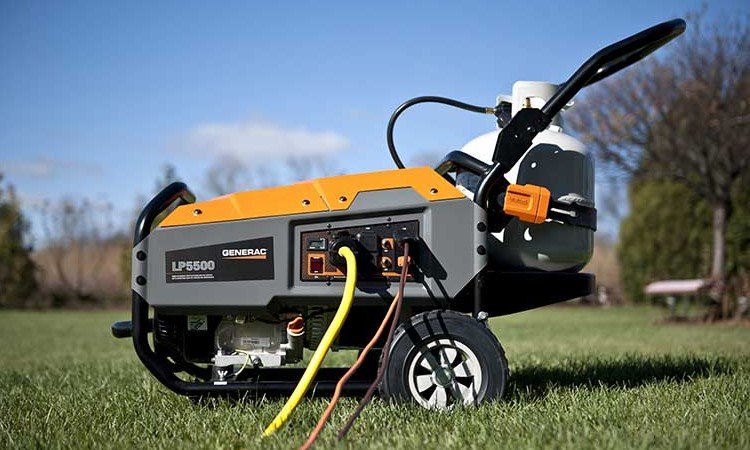
Power outages don't just interrupt your Netflix binge; they can spoil your food, disrupt essential medical equipment, and plunge your home into uncomfortable darkness. But what if you could reliably keep the lights on, the fridge humming, and even power a remote campsite with minimal fuss? That's where portable propane generators shine, offering a versatile, cleaner, and often quieter alternative to traditional gasoline models. This guide will walk you through the very best use cases for these dependable powerhouses, helping you understand when and why a propane generator is the smart choice for your home and outdoor adventures.
At a Glance: Your Guide to Portable Propane Generators
- Best for Backup: Ideal for home emergencies, keeping essential appliances (fridge, microwave, furnace fan) running when the grid fails.
- Outdoor Powerhouse: Perfect for RVing, camping, tailgating, and powering tools at remote job sites.
- Cleaner & Quieter: Propane burns cleaner than gasoline, producing fewer emissions and generally less noise, especially with inverter models.
- Long Shelf Life: Propane fuel stores indefinitely without deterioration, making it perfect for emergency preparedness.
- Dual-Fuel is Key: Look for models that run on both propane and gasoline for ultimate versatility and extended runtime.
- Inverter Advantage: Essential for sensitive electronics, offering clean power and quieter, more fuel-efficient operation.
- Sizing Matters: Don't underestimate your needs; plan for 4,000 running watts for essentials, and 7,000+ for a whole-house solution.
Why Propane is Your Power Partner: The Unsung Hero of Portable Generation
When you think about portable power, gasoline often comes to mind first. But propane, a natural gas that many already use for their grills, brings a compelling list of advantages to the table. It's not just an alternative; for many applications, it's the superior choice.
Propane generators offer a significantly cleaner and more environmentally friendly burn. They produce lower emissions and primarily combust into CO2, making them a more responsible choice for both your lungs and the planet compared to gasoline. This clean burn also translates into lower maintenance and reduced engine wear over time, as fewer carbon deposits build up.
Perhaps the biggest advantage for emergency preparedness is propane's long shelf life. Unlike gasoline, which degrades rapidly and can clog carburetors in a matter of weeks, propane's simple chemical composition means it doesn't deteriorate. You can store tanks for years without worry, ensuring your fuel is ready when you need it most. This also makes for safer storage, as propane tanks are tightly sealed, preventing leaks or evaporation.
Beyond longevity, propane is often widely available with stable fuel prices compared to the fluctuating costs of gasoline. And while not silent, propane generators generally produce less noise than their gasoline-only counterparts, especially when paired with inverter technology. This makes them much more neighbor-friendly during an outage or more pleasant for a campsite retreat.
The primary "con" often cited for propane is its lower energy density compared to gasoline, meaning you might need more fuel for the same power or runtime from a propane-only unit. However, modern dual-fuel generators largely overcome this by giving you the option to switch between fuels, leveraging propane's benefits while retaining gasoline for maximum power output when absolutely necessary. It's the best of both worlds, and these versatile units typically cost only a modest $100-$200 more than gas-only versions. When you're ready to explore specific models and their features, you can always explore portable propane generators to find the perfect fit for your needs.
Decoding Power Needs: What Do "Running" and "Starting" Watts Really Mean?
Before diving into specific scenarios, let's talk about the heart of any generator decision: wattage. Every generator has two crucial wattage numbers:
- Running Watts: This is the continuous power a generator can supply to keep your appliances operating steadily. It's the smaller, more important number for determining what you can power consistently.
- Starting Watts (also Peak or Surge Watts): This is the short burst of power many appliances (especially those with motors like refrigerators, microwaves, or power tools) need when they first kick on. This number is usually higher than the running watts, as the initial surge often demands more power for a few seconds.
The golden rule here is: always size up. People frequently underestimate their power needs. To accurately determine your requirements, list all the items you want to power, find their running and starting wattages (often on a sticker or in the manual), and use an online calculator. Remember to account for simultaneous use – if your fridge, furnace fan, and a few lights are all running, their combined running watts must be within your generator's capacity.
Here's a general guide to wattage and what it can handle: - 3,000 Running Watts: These are truly portable, lighter-duty options, typically costing $600-$700. They're suitable for smaller items like lights, phone chargers, and maybe one major appliance like a refrigerator running at a time. If your needs are consistently below this, a portable power station might be a better fit for indoor use and less maintenance.
- 4,000 Running Watts: This is often the sweet spot for handling most essential home items. Think refrigerators, microwaves, some lights, and charging devices. It offers a good balance of power and portability for emergency backup.
- 7,000 Running Watts and Higher: These are considered whole-house solutions, capable of handling multiple major appliances simultaneously. Models in this range can cost upwards of $2,000 and are often quite large and heavy. For seamless, comprehensive power distribution, these larger units are best hooked directly into your home's electrical panel by a qualified electrician, which will involve additional costs and planning.
The Smart Choice: Key Features for Optimal Portable Generators
Not all portable generators are created equal. The best models incorporate several key features that enhance safety, efficiency, and user experience. Understanding these will help you pick a generator that serves you well for years to come.
- Dual-Fuel Capability: As discussed, this is a game-changer. It means your generator can run on either gasoline or liquid propane. While gasoline might offer slightly more wattage (typically 400-700 watts more), propane provides that invaluable indefinite storage and clean burn. This versatility is crucial for preparedness, as you can use whichever fuel is more readily available or convenient.
- Inverter Technology: If you plan to power anything sensitive – like computers, TVs, modern furnace controls, or medical devices – an inverter generator is non-negotiable. Traditional generators produce "dirty" power with voltage spikes that can damage delicate electronics. Inverter generators convert AC power to DC and then back to a much cleaner, less distorted AC signal, safe for all your modern gadgets. They are also significantly quieter and more fuel-efficient, as their "eco mode" adjusts engine speed based on the load, saving fuel and reducing noise.
- Closed-Frame Design: This feature is all about noise reduction and protection. A closed-frame generator encases the engine in an insulated shell, significantly dampening sound. When combined with inverter technology's eco mode, these units are remarkably quiet (often around 52 dB(A) at 25% load from 22-25 feet), making them far more pleasant for both you and your neighbors during operation.
- CO Detection: This is a non-negotiable safety feature. Carbon monoxide (CO) is a colorless, odorless, and deadly gas. Generators should never be run indoors. However, if CO saturation reaches dangerous levels in the vicinity of the generator (e.g., if fumes drift into a nearby dwelling), a CO detection system will automatically shut down the unit, potentially saving lives.
- Established Manufacturers: Stick with brands like Westinghouse, Generac, Honda, and Champion. These manufacturers provide better warranties, robust service networks, and readily available replacement parts. Lesser-known brands might offer cheaper initial prices but often come with poor quality, bulkiness, and unreliability, which you definitely don't want in an emergency.
While generators with these advanced features might be pricier upfront, they offer unparalleled long-term value through quieter operation, superior fuel efficiency, and critical ease of use during stressful emergency situations.
Home Sweet (Powered) Home: Propane for Residential Backup
The most common and arguably most critical use case for a portable propane generator is providing emergency backup power for your home. When the power grid falters, having a reliable source of electricity can mean the difference between minor inconvenience and significant disruption or even danger.
Keeping the Essentials Alive During Outages
A portable propane generator ensures your most critical home systems remain operational. Think about it:
- Refrigerators and Freezers: Protect hundreds of dollars worth of food from spoiling.
- Lighting: Keep key rooms illuminated, preventing falls and making navigation easier, especially for families with children or elderly members.
- Heating and Cooling: Power your furnace fan in winter or a portable fan in summer. While a portable generator won't typically run a central air conditioner, it can provide crucial comfort.
- Communication & Charging: Keep phones, laptops, and medical devices charged, ensuring you stay connected and safe.
- Water Pumps: For homes with well water, a generator is essential to maintain water pressure for flushing toilets, washing, and drinking.
- Microwave & Coffee Maker: Small comforts that make a big difference during a stressful situation.
For most essential home items, a generator with 4,000 running watts is often sufficient. For example, the Westinghouse iGen5000DFc offers 3,900 running watts on gas (3,500 on propane), enough to handle a refrigerator, some lights, and a microwave. For more comprehensive whole-house solutions, you'd look at models like the Champion 201175 with 7,000 running watts, capable of handling multiple major appliances simultaneously.
Seamless Integration: Hooking Up to Your Home
For comprehensive home backup, especially with higher-wattage generators (7,000+ running watts), hooking the generator directly into your home's electrical panel is the most seamless solution. This requires a transfer switch installed by a licensed electrician. While there's an upfront cost for installation, it allows you to power specific circuits in your home without running multiple extension cords. Always consult an electrician beforehand to understand the complexities and costs involved. For smaller needs, or units like the Champion 201050 (3,000 running watts), simply running heavy-duty extension cords directly from the generator to individual appliances can suffice.
Beyond the Backyard: Outdoor & Recreational Power
Portable propane generators aren't just for emergencies; they're fantastic companions for life off the grid, bringing the comforts of home to the great outdoors or remote work sites.
Camping & RVing: Your Mobile Power Station
Imagine powering your RV's air conditioning, microwave, or entertainment system at a remote campsite without noisy, smelly gasoline fumes. Propane generators are a favorite among campers and RV enthusiasts for several reasons:
- Quieter Operation: Inverter models, especially closed-frame designs, run much more quietly than traditional generators, ensuring you don't disturb fellow campers or the tranquility of nature.
- Cleanliness: No messy gasoline spills or lingering fuel odors in your vehicle or campsite.
- Easy Fuel Management: Many RVs already use propane for heating or cooking, allowing you to use the same fuel source for your generator. A 100-gallon propane tank can run a typical generator for up to 50 hours, providing ample power for extended trips.
- Sensitive Electronics: Inverter generators provide the clean power needed for RV appliances, laptops, and charging camera gear without fear of damage.
Models like the Champion 201050 (3,000 running watts) are excellent for smaller RVs, charging batteries, and running basic campsite amenities. For larger RVs with more demanding appliances, you might consider the Westinghouse iGen5000DFc or Generac iQ5200 DF.
Tailgating & Outdoor Events: The Party Never Stops
Whether you're firing up a blender for margaritas at a football game, powering a sound system for an outdoor concert, or illuminating a night market stall, a portable propane generator makes it all possible.
- Food & Beverage: Run slow cookers, griddles, or keep coolers chilled.
- Entertainment: Power speakers, projectors, or charge devices for music and games.
- Lighting: Essential for evening events, providing safety and ambiance.
The convenience of propane – no need to handle messy gasoline, easy hookup to a standard grill tank – makes it ideal for these types of social gatherings where ease of use and cleanliness are appreciated.
Job Sites & Remote Work: Power Where You Need It
For contractors, farmers, or anyone needing power far from an electrical outlet, a portable propane generator is an invaluable tool.
- Power Tools: Operate saws, drills, air compressors, and other essential equipment.
- Lighting: Illuminate construction areas for safety and productivity, especially during early mornings or late evenings.
- Charging Stations: Keep batteries for power tools, phones, and laptops topped up.
Propane's extended shelf life is a bonus here too; you can keep a generator and fuel on-site without worrying about gasoline degrading if the unit isn't used frequently. The Champion 201175, with its 7,000 running watts, is a robust option for heavy-duty job site demands, though its 213 lbs weight means it's less "portable" in the traditional sense and more of a semi-permanent solution.
Navigating the Options: Choosing Your Portable Propane Generator
With so many options, how do you pick the right one? It boils down to a few key decisions based on your primary use cases.
Step 1: Pinpoint Your Power Needs (Again!)
This is the most critical step. Revisit the wattage discussion:
- 3,000 Running Watts: Good for light recreation, a few essential lights, and phone charging. Think small camping trips.
- 4,000 Running Watts: Excellent for essential home backup (fridge, microwave, furnace fan), moderate RV use, or tailgating. This is a versatile sweet spot for many.
- 7,000+ Running Watts: For heavy-duty home backup (multiple appliances, potential panel hookup), large RVs, or demanding job sites.
Remember, it's always better to have a little more power than you think you'll need.
Step 2: Prioritize Key Features Based on Use
- For Sensitive Electronics (Home Backup, RVing, Remote Work): An inverter generator is absolutely essential. Don't compromise here.
- For Versatility & Long-Term Storage: Dual-fuel capability is a must-have. Propane's indefinite shelf life is invaluable for emergencies, and gasoline provides a power boost.
- For Quiet Operation (Camping, Residential Use): Look for closed-frame inverter models with eco-mode. The lower the dB(A) rating, the better.
- For Safety: CO detection is non-negotiable for any generator you purchase.
- For Reliability & Support: Stick with established manufacturers like Westinghouse, Generac, Honda, or Champion.
Step 3: Consider Portability vs. Power Output
- Lighter, smaller generators (e.g., Champion 201050 at 50 lbs) are genuinely portable.
- Mid-range units (e.g., Westinghouse iGen5000DFc at over 100 lbs) are maneuverable with wheels but still a commitment to move.
- Large units (e.g., Champion 201175 at 213 lbs) are best considered for semi-permanent home backup and moved infrequently.
The bulk of propane tanks also factors into portability; you'll need to transport enough fuel for your desired runtime.
Maintenance & Fuel Management for Propane Generators
One of propane's biggest advantages is its simplicity in storage and maintenance compared to gasoline.
- Propane Tanks: Store propane tanks upright in a well-ventilated area, away from direct sunlight or heat sources. Ensure connections are secure when in use. No need for fuel stabilizers or worrying about stale gas.
- Generator Maintenance: Even with propane, regular maintenance is crucial. Refer to your owner's manual for recommended service intervals, which typically include checking oil levels, spark plugs, and air filters. The clean burn of propane generally means less frequent carburetor cleaning and fewer carbon deposits, extending engine life.
- Gasoline (for Dual-Fuel): If you opt for a dual-fuel model and plan to use gasoline, remember that gasoline still requires a fuel stabilizer (like Sta-Bil) and should be rotated every six months using a transfer pump. Stagnant gas can clog the carburetor within two weeks. Consider running your generator on gasoline periodically if you store it that way, to ensure the fuel system stays clear.
Demystifying Propane Generator Myths & FAQs
Let's clear up some common questions and misconceptions about propane generators.
Q: Are propane generators less powerful than gasoline generators?
A: Historically, propane has a lower energy density than gasoline, meaning a unit might produce slightly less power on propane than it does on gasoline. However, modern dual-fuel generators mitigate this significantly. They offer the flexibility to use gasoline for maximum power output when absolutely needed, while still providing robust power on propane for most applications. You get the best of both worlds.
Q: Are propane generators harder to fuel or store?
A: Not necessarily harder, but different. Fueling involves connecting hoses to a specialized tank, which requires proper ventilation. For larger quantities, specialized tanks are needed, requiring extra storage space and safety measures. However, the trade-off is significant: propane stores indefinitely without degrading, unlike gasoline, which requires constant rotation and stabilization.
Q: Can I use a propane generator indoors?
A: Absolutely not, under any circumstances. All fuel-based generators, including propane, produce dangerous carbon monoxide (CO) fumes. Running a generator indoors, in a garage, basement, or any enclosed space, can lead to CO poisoning, which is deadly. Always operate generators outdoors, far from windows, doors, and vents, with proper ventilation. This is why CO detection is a critical safety feature.
Q: Do propane generators really run quieter?
A: Generally, yes. Propane's cleaner combustion and lower operating pressures often contribute to less engine noise compared to traditional gasoline generators. When combined with inverter technology and a closed-frame design, the difference is very noticeable, making them ideal for noise-sensitive environments like campgrounds or residential areas during an outage.
Portable Propane Generators: Models to Consider
Based on performance, features, and reliability, here are a few standout models mentioned by experts, categorized by typical use cases:
- Top Pick for General Home Backup & Versatility:
- Westinghouse iGen5000DFc (3,900 Running Watts on Gas/3,500 on Propane): A dual-fuel inverter powerhouse with remote start, electric start, eco mode, and quiet closed-frame operation (52 dB(A)). Excellent for balancing power and features for around $1,000. Note: Not CARB-compliant.
- CARB-Compliant Dual-Fuel Option:
- Generac iQ5200 DF (3,900 Running Watts on Gas/3,500 on Propane): A strong runner-up, offering similar power, CARB compliance, CO detection, and useful features like USB ports and a robust handle. A newer model (2025), so track record is still building.
- Best for Smaller Power Needs & High Portability:
- Champion 201050 (3,000 Running Watts): A lightweight (about 50 lbs) dual-fuel inverter, perfect for camping, tailgating, or powering a few essentials. Great value.
- Best for Larger Home Backup Solutions:
- Champion 201175 (7,000 Running Watts): This heavy-duty dual-fuel closed-frame inverter generator is designed for whole-house backup. While it's heavy (213 lbs), it provides substantial power, making a panel hookup ideal for seamless distribution.
- Upgrade Pick for Reliability (Gasoline Only):
- Honda U7000iSNAND (5,500 Running Watts): If you prioritize legendary Honda reliability and exceptional quietness above all else, and don't mind gasoline-only operation, this inverter model is top-tier. Be prepared for a premium price (around $4,500).
Your Next Step Towards Reliable Power
Choosing the best portable propane generator for your needs is about thoughtful consideration, not just chasing the biggest numbers. Start by honestly assessing your typical power requirements – for emergencies, recreation, or work. Then, prioritize the features that align with those uses: dual-fuel for versatility, inverter technology for sensitive electronics, CO detection for safety, and a quiet, closed-frame design for comfort.
Investing in a high-quality portable propane generator from an established manufacturer is an investment in peace of mind. It means you'll be prepared for the unexpected power outage, can comfortably venture off-grid, and always have a reliable source of power at your fingertips. Take the time to calculate your wattage needs, explore the dual-fuel inverter options, and you'll be well on your way to a powerful, reliable future.