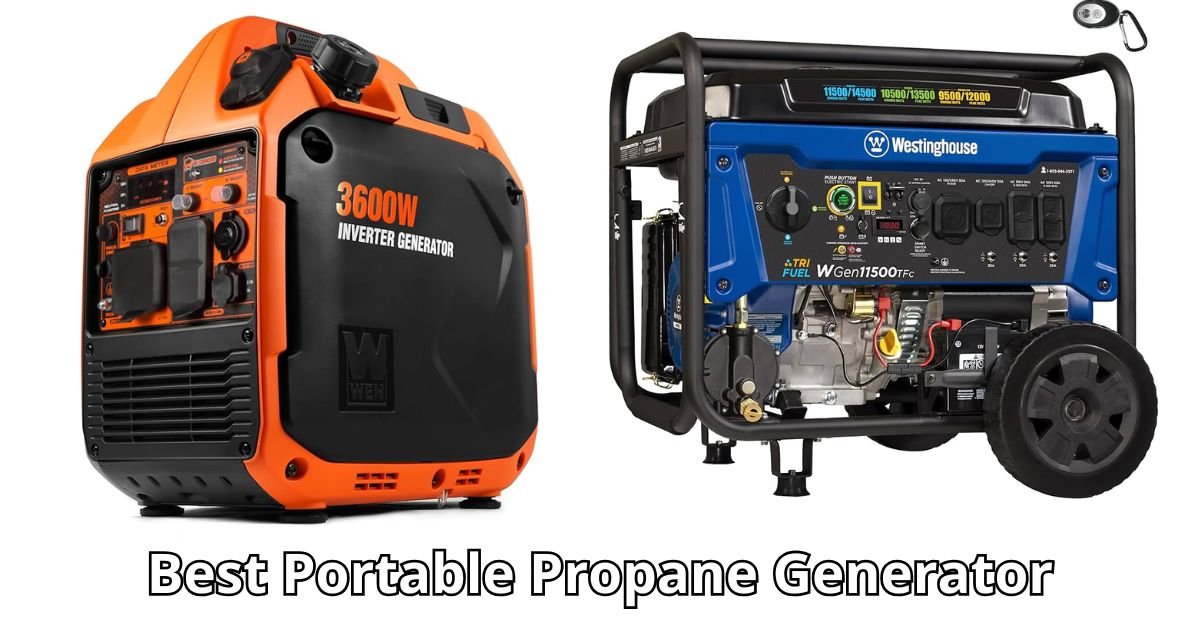
Few things feel as disruptive as a sudden power outage, or as liberating as powering your outdoor adventures far from the grid. But making the wrong choice when you're looking for reliable backup power can be costly, frustrating, and even unsafe. This Buying Guide: Choosing Your Portable Propane Generator is your roadmap to understanding the nuances, cutting through the jargon, and confidently selecting the perfect portable propane generator to meet your specific needs, whether it's for emergency home backup, tailgating, or off-grid living.
Forget the days of guesswork. We’re going to walk you through every critical decision point, ensuring you invest in a solution that’s not just powerful, but also practical, safe, and truly fits your lifestyle.
At a Glance: Your Portable Propane Generator Cheat Sheet
- Define Your Purpose First: Emergency home backup, RVing, job site, or camping? Your answer dictates wattage, features, and portability.
- Calculate Watts Accurately: List all devices, add running watts, then factor in starting watts for high-draw appliances. Don't guess.
- Propane's Edge: Cleaner burning, longer shelf life, and often dual-fuel flexibility make it a compelling choice.
- Prioritize Safety Features: Overload protection, low-oil shutoff, and especially carbon monoxide (CO) detection are non-negotiable.
- Noise Matters: Inverter generators are significantly quieter, a crucial factor for recreational use or residential areas.
- Budget Smart: Don't just look at upfront cost; consider fuel efficiency, durability, and essential safety features for long-term value.
- Always Practice Safety: Never operate indoors, use a transfer switch for home backup, and keep a CO detector handy.
Why Portable Propane? Understanding the "Why"
When you start exploring portable generators, you'll encounter a dizzying array of types and fuel sources. While conventional generators often run on gasoline or diesel, and newer options include solar power stations, portable propane generators carve out a distinct and highly advantageous niche.
They offer a cleaner burn than gasoline, reducing emissions and making them a more environmentally friendly choice. Propane also boasts an incredibly long shelf life, making it ideal for emergency backup where fuel might sit for months or even years. No more worrying about stale gasoline clogging your engine! Furthermore, many portable propane generators are actually dual-fuel generators, meaning they can run on both propane and gasoline, offering incredible flexibility when one fuel source might be scarce. This backup fuel option can be a lifesaver in prolonged outages or remote locations.
However, propane does have a slightly lower energy density than gasoline, which can translate to shorter runtimes per tank compared to an equivalent volume of gasoline, and propane might be slightly more expensive long-term in some areas. But for many users, the benefits of cleaner operation, easier storage, and fuel flexibility far outweigh these minor drawbacks.
While we're focusing on propane, it's useful to briefly understand other types:
- Conventional Generators are typically more affordable and robust, but louder and produce "dirtier" power less suitable for sensitive electronics.
- Inverter Generators, on the other hand, are the darlings of the portable world. They're lighter, significantly quieter (often around 50-65 dBA), more fuel-efficient, and produce stable, "clean" power, perfect for your laptop, smartphone, or medical equipment. They achieve this by adjusting engine speed to meet demand. Many portable propane options are also inverter generators.
- Solar Generators are eco-friendly and silent but limited by sun exposure and lower power output, best for small devices and short periods.
- Standby Generators are a different beast entirely. These heavy-duty units are permanently installed, hardwired into your home by an electrician, and automatically kick on during an outage via an automatic transfer switch. They offer high power output (e.g., 20kW can power most of a home) but are not portable and come with a hefty installation cost.
For a deeper dive into the world of portable power, you can Explore portable propane generators on our site.
Decoding Generator Lingo: Watts, Decibels, & More
Before you can choose, you need to speak the language. Here’s a quick glossary of terms you’ll encounter:
- Starting Wattage (Surge Power): This is the extra burst of power an appliance needs for a few seconds when it first kicks on. Think of your refrigerator or air conditioner.
- Running Wattage (Continuous Power): The constant power an appliance needs to operate once it's up and running. This is the wattage sustained for longer periods.
- Peak/Surge Power: The maximum wattage a generator can handle briefly (same as starting wattage).
- Continuous/Rated Power: The wattage a generator can consistently sustain. Always size your generator based on this number.
- Decibel (dBA): The unit for noise level. The lower the dBA, the quieter the generator. For context, normal conversation is around 60 dBA. WEN 56200i (approx. 50 dBA) and Honda EU3000iS are known for quietness.
- Runtime: How long the generator can operate on one tank of fuel (or propane cylinder) at a given load.
- Fuel Efficiency: How effectively the generator converts fuel into electrical power. This impacts your operating costs.
- AC (Alternating Current): The type of power used by most household appliances.
- DC (Direct Current): Used for charging batteries (like in cars or RVs). Some generators offer DC outlets, but you'll need an inverter to convert it to AC for household use.
Your Power Needs: The Crucial First Step
Choosing a generator isn't about picking the biggest or cheapest. It's about finding the right fit for your specific power demands. This journey begins by asking yourself: What will you primarily use it for?
Define Your Primary Purpose
Your main reason for buying a generator dictates everything from its size and power output to its features and noise level.
- Emergency Home Backup: You'll need a reliable, higher-wattage generator (typically 5000+ watts to run essentials like a refrigerator, some lights, and perhaps a heating component). Safety features like CO detection and compatibility with a transfer switch are paramount.
- Outdoor Activities (Camping, RVing): Portability and low noise are king here. An inverter generator around 2000 watts is usually sufficient for charging devices, running small appliances, and maintaining a comfortable campsite without disturbing neighbors.
- Job Sites: Durability and high power output (8000+ watts for industrial tools) are critical. Noise might be less of a concern than sheer power.
- Tailgating/Parties: Balance portability, moderate power for griddles or entertainment systems, and multiple outlets. Noise level can be a factor depending on the venue.
- Boating/Fishing: Look for marine-rated generators or models designed for wet environments.
- Small Businesses: Emphasize reliability and fuel efficiency for extended operation during outages.
Calculate Your Wattage Wisely
This is where the rubber meets the road. Under-sizing your generator leads to frustrating overloads and potential damage, while over-sizing means wasted money and less efficient operation.
- List Your Essentials: Make a comprehensive list of all the devices and appliances you intend to power simultaneously.
- Find the Watts: For each item, note its running wattage and, if applicable, its starting wattage. This information is usually found on the appliance label, in the owner's manual, or online.
- Common Wattage Examples (Running W / Starting W):
- Incandescent Light Bulb: 60-100W / N/A
- Refrigerator: 100-800W / 800-1800W
- Air Conditioner (5000 BTU): 500-600W / 1250-1500W
- Microwave Oven: 800-1000W / 1000-1500W
- Laptop: 20-100W / 50-100W
- Sum the Running Watts: Add up the running wattage of all devices you plan to operate at the same time. This gives you your baseline continuous power requirement.
- Account for Starting Watts: Identify the appliance with the highest starting wattage on your list. Add this to your total running wattage. For example, if your running total is 3000W and your refrigerator needs an extra 1000W to start (on top of its running 400W), your generator needs to handle 3000W + 1000W = 4000W at least for that brief starting surge. If you have multiple high-start-wattage items, you'll need to turn them on one by one.
- Add a Buffer: Always factor in a 10-20% buffer for future needs or unexpected demands.
Your generator's continuous power rating should be sufficient for your calculated needs.
Fueling Your Choice: Beyond Propane (and Back Again)
While this guide focuses on propane, understanding the landscape of fuel options helps underscore its unique advantages.
- Gasoline: The most common fuel for portable generators, widely available, and generally less expensive upfront. However, gasoline has a short shelf life (requiring fuel stabilizer for storage), produces more emissions, and its price can fluctuate.
- Diesel: Known for higher energy density, better fuel efficiency, and a lower fire hazard, diesel generators are often for heavy-duty use. They are more expensive upfront and typically bulkier.
- Propane: Our star! Cleaner emissions, significantly longer shelf life (excellent for emergency preparedness), and easier to store in cylinders. As mentioned, the main trade-offs are slightly lower energy density (shorter runtimes for the same volume) and potentially higher long-term fuel costs in some regions.
- Natural Gas: Primarily for standby generators (requires a permanent gas line). Offers an abundant, inexpensive, clean, and virtually limitless fuel supply, but is not portable and has lower energy density than propane.
- Solar: Renewable, eco-friendly, and silent. However, solar generators have limited power output, are weather-dependent, and come with high initial setup costs.
The benefits of propane, especially for emergency backup or RVing where you want clean, stable, and storable fuel, make it an outstanding choice. The dual-fuel option found in many portable propane models offers the best of both worlds.
Portability & Practicality: Moving and Storing Your Powerhouse
A "portable" generator should actually be portable for you.
Consider the generator's size, weight, and design features. Lighter, more compact units (often inverter models) are perfect for tossing in the trunk for camping. Larger, more powerful conventional generators, even if they run on propane, can be quite heavy. Look for features like:
- Built-in wheels: Essential for anything over 70-80 pounds.
- Folding handles: Makes transport and storage much easier.
- Roll cages: Provides protection if you’re moving it around a job site.
Think about where you'll store it too. A smaller footprint is always a plus, especially if garage space is at a premium.
Connectivity & Control: Outlets, Switches, and Smart Features
A generator is only as useful as its ability to connect to your devices.
A World of Outlets
Check the variety and number of outlets to ensure compatibility with your appliances:
- NEMA 5-20R (120V/20A): Standard household outlets, up to 2400W.
- NEMA L5-30R/L5-20R (120V twist-lock): Provides a secure connection for higher 120V loads, up to 3600W.
- NEMA TT-30R (120V/30A RV): Specific outlet for RVs, up to 3600W.
- NEMA 14-50R, L14-30R, L14-20R (120/240V): Heavy-duty outlets for large appliances or powering a home transfer switch, ranging from 4800W to 12,000W.
- NEMA SS2-50R (120/240V/50A): For boats and marine applications.
- 12V DC receptacles and USB ports: Handy for charging small electronics directly.
Smart Connections for Modern Living
Beyond basic outlets, modern generators offer features that enhance convenience and safety:
- Parallel Connectivity: Allows you to link two smaller inverter generators together to effectively double your power output. This is a fantastic option for flexibility – use one for light loads, or two for heavier demands.
- Remote Start: Start or stop your generator from a distance using a key fob or a smartphone app. Incredibly convenient, especially in bad weather.
- Wi-Fi Connectivity: Some models allow you to monitor fuel levels, power output, and even troubleshoot issues remotely via an app.
- Transfer Switch Compatibility: Absolutely crucial for safely connecting your generator to your home's electrical panel. This prevents backfeeding electricity onto the utility grid, which can be deadly for utility workers. An electrician should install a transfer switch, which can be manual (you flip a switch) or automatic (common for standby units). Never backfeed power directly through a regular wall outlet.
The Sound of Power: Noise Levels & Your Neighbors
Nobody wants a generator that sounds like a jet engine. Noise is measured in decibels (dBA), and it’s a significant factor, especially for recreational use or in residential areas.
- Inverter generators are typically the quietest, often ranging from 50-65 dBA, comparable to a quiet conversation or a dishwasher. This makes them ideal for camping, RVing, or any situation where noise pollution is a concern.
- Conventional portable generators can range from 70-80 dBA, similar to a vacuum cleaner or a garbage disposal.
- Industrial models can hit 90-100 dBA, akin to a jackhammer.
If quiet operation is a priority, lean heavily towards an inverter generator, even if it means a slightly higher upfront cost.
Endurance & Efficiency: Runtime and Fuel Burn
How long do you need your generator to run, and how much fuel will it chew through?
- Runtime: This specifies how long a generator can run on a full tank (or propane cylinder) at a certain load (e.g., 50% load). Longer runtime means less frequent refueling, which is a huge convenience during an outage or extended trip. A larger fuel tank generally means longer runtime.
- Fuel Efficiency: An efficient generator converts more fuel into usable electricity. Features like Eco-Mode (found on many inverter generators) automatically adjust engine speed to match the electrical load, saving fuel and reducing noise when full power isn't needed. Electronic Fuel Injection (EFI) also contributes to precise fuel control, improving efficiency and cold starting.
Consider your likely usage patterns. If you need power for extended periods, investing in a generator with good fuel efficiency and a decent tank size will save you money and hassle in the long run.
Starting Strong: Your Ignition Options
How you start your generator might seem minor, but it can make a big difference in convenience.
- Recoil Start (Manual Pull-Start): The traditional method, requiring a strong pull on a cord. Common on smaller, less expensive models. Requires physical effort.
- Electric Start: A simple push-button or key-turn operation, usually powered by a small onboard battery. Far more convenient, especially for larger generators or in cold weather.
- Remote Start: As discussed, the ultimate in convenience, allowing you to start your generator from a distance using a key fob or app.
For most users, an electric start is a worthwhile upgrade, offering ease of use without significantly increasing cost.
Safety First, Always: Essential & Advanced Features
Safety should never be an afterthought. Modern generators come equipped with crucial safety mechanisms and handy advanced features.
Non-Negotiable Safety Features
These are critical for protecting your generator and, more importantly, yourself and your family:
- Overload Protection: Automatically shuts down the generator if the connected appliances draw too much power, preventing damage to both the generator and your electronics.
- Automatic Voltage Regulation (AVR): Ensures a consistent and stable power output, crucial for protecting sensitive electronics from voltage fluctuations. Inverter generators inherently provide "cleaner" power than conventional ones, but AVR is important for the latter.
- Low-Oil Shutoff: Automatically turns off the engine if the oil level drops too low, preventing catastrophic engine damage.
- Carbon Monoxide (CO) Detection: An absolute must-have. These sensors automatically shut down the generator if dangerous levels of CO are detected in the vicinity. CO is an odorless, colorless, deadly gas. Always use a separate CO detector in your home when operating a generator.
Smart Features for Enhanced Performance
Beyond safety, look for features that boost convenience and efficiency:
- Parallel Capability: (As mentioned above) Connect two generators for more power.
- Eco-Mode: (Also mentioned) Adjusts engine speed for fuel efficiency and reduced noise.
- Electronic Fuel Injection (EFI): Provides precise fuel control for better efficiency, easier cold starts, and reduced emissions.
- Digital Displays/Monitoring: Real-time data on fuel levels, runtime, wattage output, and maintenance reminders, making management easier.
The Bottom Line: Budgeting for Reliability
Portable generators typically range from $200 for small, basic models to $2,500+ for high-end, powerful inverter units with all the bells and whistles. Standby generator installation costs vary widely (e.g., ~$3,000 for new construction, but complications can add thousands more), a stark contrast to portable options.
Your budget should reflect your power needs, frequency of use, and desired features. A very low upfront cost might mean you're sacrificing essential safety features or durability, leading to higher long-term repair and maintenance costs.
Budgeting Tips:
- Prioritize Essentials: Don't skimp on wattage or critical safety features.
- Seek Multi-Use Functionality: A dual-fuel inverter generator might cost more upfront but offers versatility for various situations.
- Consider Fuel Efficiency: An Eco-Mode or EFI generator, though potentially more expensive initially, can save you significant money on fuel over its lifespan.
- Shop Around and Compare: Prices can vary between retailers.
- Look for Sales: Generators often go on sale during specific seasons or before major weather events.
- Certified Pre-Owned/Refurbished: If buying used, ensure it comes with a warranty from a reputable seller.
- Financing Options: Some retailers offer payment plans.
Think of your generator as an investment in peace of mind and convenience.
Trusting Your Source: Brand Reputation & Longevity
While many brands exist, some consistently stand out for quality, reliability, and customer support. Brands like Westinghouse, Honda, and Champion are often cited for their dependable performance.
When evaluating brands:
- Read Customer Feedback: Look for consistent patterns in reviews regarding reliability, ease of use, and customer service.
- Check Industry Awards/Ratings: Recognized excellence often signals a quality product.
- Warranty and Support: A good warranty (e.g., 2-5 years) indicates a manufacturer's confidence in their product. Easy-to-access customer service and readily available spare parts are also crucial for longevity.
- Build Quality: Look for durable materials (stainless steel components, high-quality plastics) that can withstand outdoor conditions and regular use. Low-oil shutoff and self-cleaning features can also contribute to lower maintenance needs.
Beyond the Purchase: Essential Generator Safety
Owning a portable generator comes with significant responsibilities. Safety is paramount.
- Read the Owner's Manual: This isn't optional. Understand your specific model's operation, maintenance, and safety guidelines before you even start it.
- Outdoor Use ONLY: NEVER operate a gas or propane generator indoors, in a garage, basement, crawl space, shed, or on a screened-in porch, even with open doors and windows. Generators produce carbon monoxide (CO), which is deadly.
- Maintain Safe Distance: Place your generator at least 20 feet from your home, away from any windows, doors, or intake vents. This helps prevent CO from entering your living space and provides adequate ventilation to prevent overheating. Keep it at least 5 feet away from surrounding surfaces.
- Carbon Monoxide Detectors: Install battery-operated CO detectors with an alarm in your home and check them regularly. This is your life-saving early warning system.
- Proper Fuel Storage: Store propane cylinders upright and securely. If using a dual-fuel generator, use a fuel stabilizer for stored gasoline to prevent degradation and keep it away from heat sources. Never refuel a hot generator.
- Transfer Switches for Home Backup: For connecting a generator to your home's electrical panel, a professionally installed transfer switch is essential. This safely isolates your home from the utility grid, preventing dangerous "backfeeding" that can electrocute utility workers. Without a transfer switch, you can only power individual appliances using properly rated, heavy-duty extension cords directly from the generator outlets.
- Proper Extension Cords: Use heavy-duty, outdoor-rated extension cords that are appropriate for the wattage requirements of your appliances. Overloaded or damaged cords are fire hazards.
- Grounding: Follow manufacturer instructions for grounding your generator, which helps protect against electrical shock.
Your Next Steps to Confident Power
Choosing the right portable propane generator is a journey of defining your needs, understanding the tech, and prioritizing safety. By systematically evaluating your purpose, calculating wattage, assessing features like noise and connectivity, and committing to proper safety protocols, you’re not just buying a machine – you’re investing in preparedness and peace of mind.
Take your time, use this guide as your reference, and make an informed decision. The perfect portable propane generator is out there, ready to power your life, whatever comes your way.