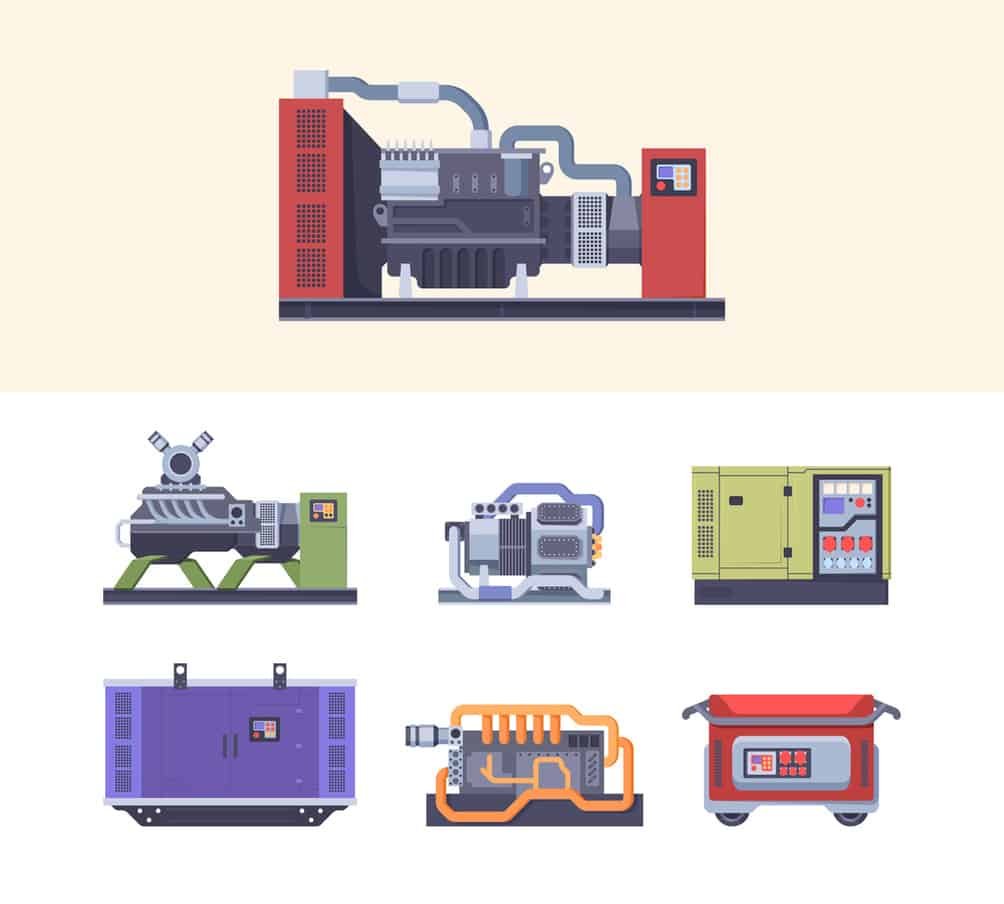
When the lights go out, your peace of mind doesn't have to go with them. Choosing the right backup power solution, whether it's a trusty propane generator or one of its portable counterparts, is a critical decision that impacts your comfort, safety, and budget. It's not just about keeping the fridge cold; it's about staying connected, running essential medical equipment, or simply maintaining a semblance of normalcy when severe weather or grid failures hit. This guide cuts through the noise to help you understand the nuances, so you can confidently select the best power solution for your specific needs.
At a Glance: Your Portable Power Options
- Portable Propane Generators: Great for temporary, flexible power; easier to move around; lower upfront cost; requires manual setup.
- Standby Propane Generators: Automatic, permanent whole-home power; higher initial investment; professional installation required.
- Gasoline Generators: Cheaper upfront; fuel widely available, but less stable for long-term storage and burns dirtier.
- Dual-Fuel Generators: Offers flexibility to switch between gasoline and propane, providing a versatile middle ground.
- Key Decision Factors: Your specific power needs, budget (initial vs. ongoing), local regulations, and willingness to manage fuel and maintenance.
The Propane Powerhouses: Portable vs. Standby Generators
Propane generators are a popular choice for backup power, and for good reason. Propane burns cleaner than gasoline, offers an indefinite shelf life, and can be stored in large quantities safely. But not all propane generators are created equal. You’ll primarily encounter two main categories: portable units you wheel into place and permanent standby systems that kick on automatically. Understanding the distinction is your first step.
Portable Propane Generators: Flexible Power On the Go
Think of portable propane generators as your versatile workhorse. These wheeled units are designed for temporary power needs, making them ideal for camping trips, construction sites, tailgating, or providing emergency backup for a few essential circuits at home. They're about convenience and mobility, giving you power wherever you need it, whenever you need it. If you're looking for flexible backup solutions, you might want to explore portable propane generators further.
What Power Can They Deliver?
Portable propane generators come in a range of sizes, each suited for different applications:
- 2,000–4,000 Watts: These lighter, quieter models are perfect for basic needs like powering a few lights, a refrigerator, or charging devices during a camping trip or a short outage. Expect them to run 8-12 hours at 50% load on a modest amount of fuel (0.5-1 gallon per hour).
- 5,000–7,000 Watts: Stepping up, these generators can handle more essential home circuits—think refrigerator, freezer, lights, and perhaps a few small appliances or even a window AC unit. They often feature multiple outlets and electric start for ease of use, running for 6-10 hours at 50% load using 1-2 gallons of propane an hour.
- 8,000–12,000 Watts: For powering a larger portion of your home's essentials, including well pumps or water heaters, these heavier-duty units are your go-to. They are built for robust performance and typically consume 2-3 gallons of propane per hour, providing 4-8 hours of power at 50% load.
Key Features & Upfront Investment
The hallmark of portable units is their mobility and versatility. You can move them where needed, from the backyard to a remote cabin. Their lower upfront cost, typically ranging from $500 to $1,900, makes them an accessible option for many homeowners. However, remember they require manual operation and manual load management—you'll be the one starting it up and deciding what to plug in.
Setting Up Your Portable Power
Installation for a portable propane generator is relatively minimal, focusing primarily on safety. You'll need to:
- Position it outdoors: Always place the generator on a stable, level surface, away from windows, doors, and vents to prevent carbon monoxide poisoning. Never operate it indoors.
- Ground the system: This is a crucial safety step to protect against electrical shock.
- Connect propane: Use a standard 20-100 lb propane cylinder and appropriate hoses and regulators.
- Connect to your home: This is done via heavy-duty extension cords for individual appliances, or, ideally, through a manual transfer switch installed by a licensed electrician to safely power essential home circuits. Always use GFCI-protected outlets.
Keeping It Running: Costs & Maintenance
While the initial cost is lower, factor in ongoing expenses:
- Fuel: Propane costs fluctuate, but it's your primary operating expense.
- Annual Service: Budget $100-$200 for professional check-ups, though much maintenance can be owner-performed.
- Storage: Keep propane tanks and the generator in a safe, well-ventilated area.
- Replacement Parts: Spark plugs, filters, and oil will need replacing over time.
Owner-performed maintenance is straightforward: oil changes every 50-100 hours, air filter cleaning monthly, and spark plug replacement every 200 hours. A quick fuel system check before each use ensures readiness. An annual professional service ensures longevity and optimal performance.
The Sound of Power: Noise Levels
Portable generators can be noisy. Standard models typically operate between 65-75 dB at 23 feet, which is comparable to a normal conversation or a vacuum cleaner. Inverter models, however, are significantly quieter, often falling in the 50-60 dB range—more like a refrigerator hum. Keep local noise ordinances and neighbor relations in mind when choosing.
Who Are Portable Propane Generators Best For?
These units are ideal for budget-conscious buyers, those with infrequent power needs, individuals requiring mobile power, or homeowners comfortable with DIY installation and operation.
Standby Propane Generators: Seamless, Automatic Protection
For ultimate convenience and whole-home protection, standby propane generators are the gold standard. These are permanently installed systems that spring to life automatically within seconds of a power outage, ensuring your life continues uninterrupted. They are designed for seamless, long-duration backup, offering peace of mind even when you're not home.
What Power Can They Deliver?
Standby generators boast a wider and often higher power output range than portable units:
- 7,000–15,000 Watts: Perfect for providing backup to an average-sized home's essential circuits, these units can typically run for 24-48 hours at 50% load on a residential propane tank. Fuel consumption is usually 1.5-2.5 gallons per hour.
- 16,000–25,000 Watts: For larger homes or those with more extensive backup needs (like central air conditioning or multiple high-wattage appliances), these systems offer robust coverage. Many include smart load management and remote monitoring capabilities, running for 24-72 hours at 50% load, consuming 2.5-4 gallons per hour.
- 25,000 Watts and Beyond: These are typically reserved for very large residences or commercial applications, offering advanced controls and extended runtimes (48-96 hours or more) with higher fuel consumption (4+ gallons per hour).
Key Features & The Investment
The defining characteristic of standby generators is their automatic operation. They sense an outage, start up, and transfer power without any manual intervention. This higher power output means they can often cover your whole house, not just select circuits. They are permanently installed, integrating seamlessly into your home's electrical system, and often come with advanced features like smart monitoring, remote control, self-diagnostics, and load shedding capabilities to prioritize essential appliances.
The investment is significantly higher, often ranging from $7,000 to $20,000+ for the unit and professional installation.
Professional Installation: A Must-Have
Unlike portable units, standby generators require professional installation due to their complexity and permanent integration. The process involves:
- Site Preparation: Creating a concrete pad for stable placement and running electrical conduit.
- Permanent Placement: Locating the generator outdoors, away from your home, to meet safety and code requirements.
- Propane Line Connection: Tying into a large, permanent residential or bulk propane tank via an underground line.
- Automatic Transfer Switch (ATS) Installation: This is the brains of the operation, safely disconnecting your home from the utility grid and connecting it to the generator when power fails.
This complex process necessitates licensed electricians, plumbers/propane technicians, and strict adherence to local permits and inspections to ensure safety and code compliance.
Ongoing Costs & Maintenance for Standby Units
Operating costs for standby units include:
- Annual Maintenance Contracts: Budget $200-$500 for professional service, which is essential to keep these complex systems in peak condition.
- Property Considerations: A standby generator can sometimes impact homeowners insurance or property taxes, so check with your providers.
- Extended Warranties: Optional but often recommended for long-term peace of mind.
Maintenance for standby units is primarily professional. They typically perform monthly self-checks and require annual professional service for oil/filter changes, system diagnostics, and proactive issue resolution. Service contracts often provide priority service and extended warranty benefits, ensuring your system is always ready.
The Sound of Seamless Power: Noise Levels
While generally quieter than standard portable generators, standby units still produce noise. Most operate between 60-70 dB at 23 feet, with some quiet models as low as 55-65 dB. Since they are fixed, the noise consistently affects the same area.
Who Are Standby Propane Generators Best For?
Standby units are the choice for homeowners facing frequent or prolonged outages, those needing whole-house protection, families with medical equipment that requires uninterrupted power, or businesses prioritizing continuity.
Safety and Environmental Standards
Both portable and standby propane generators are built to meet rigorous safety and environmental standards. They typically carry UL Certification for electrical safety, include crucial features like carbon monoxide detection, overspeed/low oil shutdown to prevent damage, and comply with EPA Regulations for emissions. Speaking of emissions, propane generators generally boast a lower carbon footprint compared to their gasoline counterparts due to propane's cleaner burning properties.
Propane vs. Gasoline: Fueling Your Decision
Now that we’ve explored the two types of propane generators, let's broaden the comparison to include gasoline, the other major player in the portable power arena. Understanding the pros and cons of each fuel type is crucial for making an informed decision.
| Feature | Propane Generators | Gasoline Generators |
|---|---|---|
| Fuel Cleanliness | Burns cleaner (less engine wear, fewer mechanical issues) | Burns less cleanly (higher breakdown risk, carburetors clog) |
| Fuel Shelf Life | Indefinite (no degradation) | Short (degrades within a few months) |
| Fuel Storage | Safer to stockpile, larger quantities possible | Difficult to store large quantities (volatile, flammable) |
| Maintenance | Generally less maintenance required | More frequent maintenance (due to dirty fuel) |
| Availability | Less readily available than gas stations | Widely available at gas stations |
| Energy Density | Lower (less power than same-size gasoline model) | Higher (more power per gallon) |
| Cost (Upfront) | Often higher initial cost | More affordable to purchase |
| Operating Cost | Can be higher due to fuel efficiency and availability | Generally more affordable to operate |
| Emergency Use | Fuel shortages less common during outages | Fuel shortages very common during emergencies |
The Propane Advantage
Propane shines in several key areas. Its cleaner burn significantly reduces wear and tear on your generator's engine, leading to a longer lifespan and fewer mechanical headaches compared to gasoline. This translates to less maintenance over time. Crucially, propane has an indefinite shelf life—it won't degrade like gasoline, meaning your fuel supply will be ready whenever an emergency strikes. Storing large propane cylinders or a bulk tank is also safer and often more permissible than storing volatile gasoline, making it a reliable option for extended outages.
However, propane does have its drawbacks. It has a lower energy density than gasoline, meaning a propane generator will produce slightly less power than an equivalently sized gasoline model. Propane isn't as readily available as gasoline, especially if you rely on smaller cylinders and don't have a large bulk tank. This can lead to higher up-front and operating costs for the fuel itself, depending on market prices.
The Gasoline Trade-Off
Gasoline generators are often the more affordable option to purchase, making them attractive for budget-conscious buyers. Fuel is widely available at nearly every gas station, and with features like electric starters and easy home circuit integration, they can be straightforward to use and refuel. Their higher energy density also means they can offer slightly better operating efficiency in terms of power output per gallon.
But gasoline comes with significant compromises. It does not burn as cleanly as propane, leading to more frequent maintenance, higher breakdown risks, and carburetors that can clog easily if not run regularly. The short shelf life (a few months at best) means you can't stockpile it reliably for long-term emergencies without fuel stabilizers. Storing gasoline in large quantities is also dangerous, highly volatile, flammable, and often restricted by HOAs or local codes. During emergencies, fuel shortages at gas stations are notoriously common, leaving you scrambling.
The Best of Both Worlds: Dual-Fuel Generators
For those who want flexibility, dual-fuel generators offer a compelling compromise. These units are designed to run on both gasoline and propane, allowing you to switch between fuel sources as needed. You might start with gasoline for initial power and then switch to propane for extended, cleaner-burning operation once the gas supply runs low or if propane is more readily available.
They typically use a carburetor for gasoline and a separate external line/regulator for propane. This versatility can provide excellent reliability, combining the immediate availability of gasoline with the clean-burning, long-shelf-life benefits of propane. Some advanced dual-fuel models can also integrate with natural gas lines, offering truly unlimited run time for certain installations (often called tri-fuel or bi-fuel with natural gas).
Making the Right Choice: Your Action Plan
Deciding between propane generators and other portable power solutions boils down to a few critical questions about your needs, budget, and local environment. There's no one-size-fits-all answer, but by systematically evaluating your situation, you can make the most confident decision.
1. Calculate Your Power Needs Accurately
Before you look at a single generator, identify what you absolutely must power during an outage.
- List Essential Appliances: Think refrigerator, lights, furnace fan, well pump, medical devices, phone chargers.
- Check Starting Wattage (Surge) vs. Running Wattage: Many appliances (especially those with motors) require a higher surge wattage to start than they do to run. This is crucial for sizing your generator.
- Sum Your Wattage: Add up the running watts of all appliances you want to run simultaneously, plus the highest starting wattage of any single appliance. This will give you a rough estimate for the minimum generator size you need.
- Example: If your fridge needs 800 running watts and 2000 starting watts, and your furnace fan needs 500 running watts, you'd need at least 2000 watts to start the fridge, plus 500 running watts for the fan once the fridge is running. A 2500-watt generator might just cut it, but a 3000-watt model would provide more comfort.
2. Evaluate Your Budget: Beyond the Sticker Price
Your budget isn't just the upfront purchase price. Consider the full cost of ownership:
- Initial Purchase: Generator unit, transfer switch (if applicable), necessary cords/accessories.
- Installation Costs: Significant for standby generators (professional labor, permits, electrical/propane hookups). Less for portable (but consider transfer switch installation).
- Fuel Costs: Propane vs. gasoline prices, storage tank rental/purchase.
- Maintenance: Annual service, oil, filters, spark plugs.
- Storage: Secure, weather-protected storage for the generator and fuel.
While a gasoline portable generator might seem cheapest initially, the long-term fuel storage issues and increased maintenance could tip the scales towards propane or a dual-fuel option over time.
3. Check Local Codes, Permits, and HOA Rules
This step is non-negotiable, especially for standby generators.
- Permits: Most permanent installations require electrical, plumbing, and building permits.
- Setback Requirements: Local ordinances dictate how close a generator can be to your home, property lines, windows, and doors (for noise and carbon monoxide safety).
- Fuel Storage: Rules exist for propane tank sizes and placement.
- HOA Restrictions: Many homeowners' associations have rules regarding generator types, placement, and noise levels. Ignoring these can lead to fines or forced removal.
Always consult your local municipality and HOA before purchasing or installing.
4. Compare Options and Get Quotes
Once you know your needs and local rules, it's time to shop around:
- Research Specific Models: Read reviews, compare features, and check warranties for portable, standby, and dual-fuel options that fit your wattage requirements.
- Get Multiple Quotes: For standby generators, obtain at least three quotes from licensed and reputable professionals (electricians, HVAC companies that specialize in generators). Ask for detailed breakdowns of equipment, labor, permits, and estimated timelines.
- Ask About Service Contracts: Inquire about ongoing maintenance plans for standby units.
5. Consult Licensed Professionals
For any generator installation beyond simply plugging in appliances to a portable unit, professional consultation is paramount.
- Electrical Assessment: A licensed electrician can evaluate your home's electrical panel, determine the best transfer switch option (manual or automatic), and ensure safe integration.
- Site Evaluation: They can help you determine the optimal, safest, and code-compliant location for your generator and propane tank.
- Code Compliance: Professionals are up-to-date on local and national electrical and building codes.
- Product Recommendations: Based on your actual home infrastructure, they can recommend specific generator models and sizes.
Engaging with experts early ensures your investment is safe, compliant, and truly meets your backup power needs.
Common Questions and Misconceptions
Let's address some quick clarifications that often come up when discussing generators.
Are propane generators safe to use indoors?
Absolutely not. Like all internal combustion generators, propane generators produce carbon monoxide, an odorless, colorless, and deadly gas. They must always be operated outdoors in a well-ventilated area, far from windows, doors, and vents. Install carbon monoxide detectors inside your home for added safety.
How long can a propane generator run continuously?
Portable propane generators are designed for intermittent use, usually capable of running for 4-12 hours on a standard tank at 50% load before needing a refill. Standby generators, connected to larger fuel tanks, are built for longer durations, often running for 24-72 hours or even longer with a sufficiently sized bulk tank, though most manufacturers recommend periodic shutdowns for maintenance. Always refer to your specific model's manual.
Is propane more expensive than gasoline for generators?
Per gallon, propane is often cheaper than gasoline. However, propane has a lower energy density, meaning you need more of it to produce the same amount of power as gasoline. This can translate to higher fuel consumption and potentially higher operating costs for propane over time, depending on fuel prices and generator efficiency. The trade-off is cleaner burn and better fuel storage.
Can I convert a gasoline generator to propane?
Yes, conversion kits are available, but they require technical expertise to install correctly and safely. Improper conversion can be dangerous and may void your generator's warranty. It's often safer and more reliable to purchase a factory-built dual-fuel generator if you want that flexibility.
Do I need a transfer switch for a portable generator?
For safely powering essential home circuits from a portable generator, a manual transfer switch is highly recommended and, in many areas, required by code. Plugging appliances directly into the generator with extension cords is fine, but for wiring directly into your home's electrical panel, a transfer switch prevents dangerous backfeeding into the utility grid, which can injure utility workers and damage your home's electrical system.
Your Power, Your Choice: Stepping Forward Confidently
Navigating the world of backup power can feel overwhelming, but by understanding the distinct advantages and trade-offs of propane generators versus other portable power solutions, you're well-equipped to make an intelligent decision. For most homeowners seeking reliable, long-term backup, propane generators—especially standby units or versatile dual-fuel models—offer significant advantages in terms of fuel stability, clean operation, and peace of mind.
Whether you opt for the grab-and-go flexibility of a portable propane generator or the seamless, automatic protection of a whole-home standby system, the goal remains the same: to keep your essential services running when the grid fails. By carefully calculating your power needs, assessing your budget, understanding local regulations, and engaging with qualified professionals, you can confidently invest in a power solution that safeguards your home and family, no matter what challenges come your way.