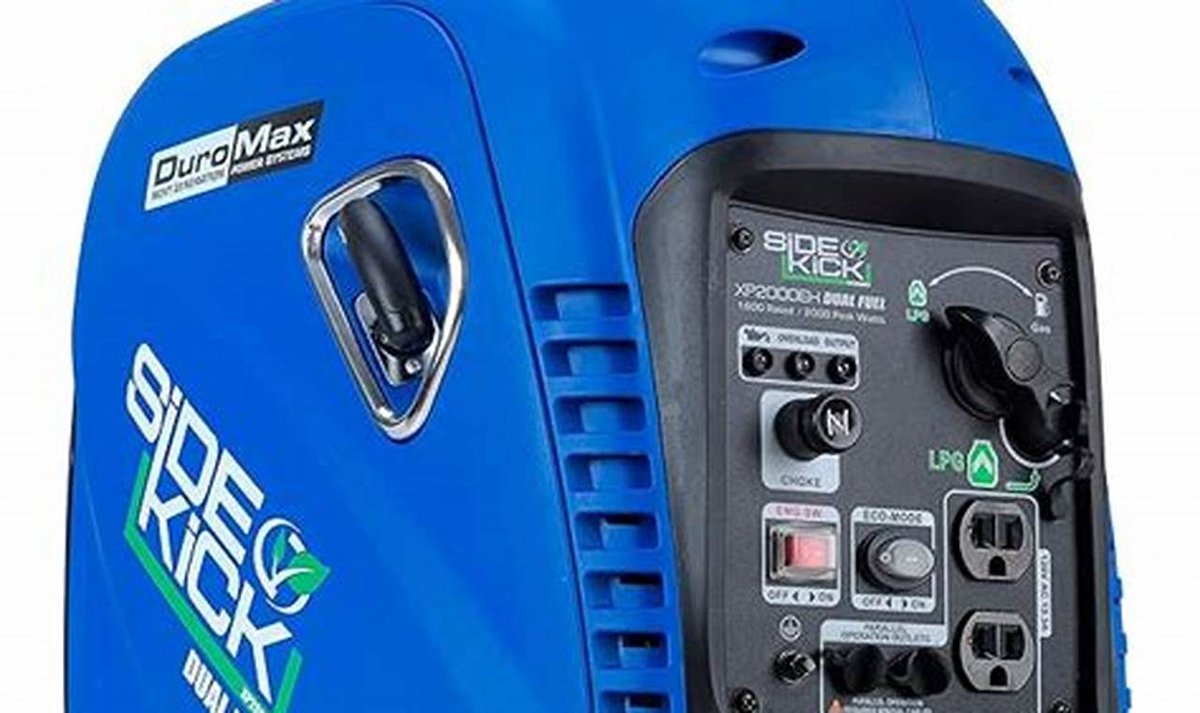
When the grid goes dark, a portable propane generator can feel like a superpower. But to truly harness that power, you need a firm grasp of what lies beneath the hood: its specifications. Understanding Portable Propane Generator Specifications isn't just about reading numbers; it's about translating those figures into real-world performance, ensuring you pick the right machine for your specific needs, whether that's powering a campsite or keeping essential home circuits alive during an outage.
Let's cut through the jargon and get straight to what matters most.
At a Glance: Key Takeaways for Portable Propane Generators
- Wattage is King: Match the generator's running and starting watts to your actual power needs. Don't underestimate "surge" power.
- Fuel Efficiency Varies: Expect 0.5-1 gallon/hour for smaller units and 2-3 gallons/hour for larger ones at 50% load.
- Portability & Convenience: Designed for temporary, manual use with easy setup (outdoors, grounded, simple connections).
- Cost-Effective: Typically $500-$1,900 upfront, with manageable ongoing fuel and maintenance costs.
- Clean & Stable Fuel: Propane offers lower emissions, doesn't degrade, and simplifies storage compared to gasoline.
- Safety First: Always operate outdoors, use CO detectors, and never overload the unit.
What Makes Portable Propane Generators Tick?
At their core, portable propane generators are ingenious machines designed to bring electrical power wherever you need it. They convert liquid propane gas into electricity through an internal combustion engine, offering a reliable, albeit temporary, power source. Unlike their permanently installed "standby" cousins, these units are characterized by their mobility, versatility, and manual operation, making them perfect for diverse applications from camping trips and construction sites to emergency home backup.
Think of them as your mobile power station, ready to roll out when the unexpected happens or when you just want to power up off-grid.
The Power Play: Decoding Generator Wattage
Perhaps the most critical specification to understand is wattage. This number dictates how much electrical power your generator can produce, and it's essential for ensuring you can run all your desired appliances without overloading the system.
Starting vs. Running Watts: The Critical Distinction
You'll typically see two wattage figures:
- Running Watts (or Rated Watts): This is the continuous power the generator can produce. It's the maximum sustained load it can handle.
- Starting Watts (or Surge Watts): This is the extra burst of power some appliances need for a few seconds when they first turn on. Motors, compressors, and pumps are notorious for drawing a significant surge of power upon startup, often 2-3 times their running wattage. Your generator must be able to handle this brief surge.
The Golden Rule: Always calculate the total running wattage of all the items you want to power simultaneously, then identify the single item with the highest starting wattage. Your generator's starting wattage capacity must exceed that single highest surge requirement, and its running wattage must exceed the total running wattage of everything connected.
Wattage Tiers & Their Real-World Uses
Portable propane generators typically range from 2,000 to 12,000 watts, catering to different power demands:
- 2,000-4,000 Watts: Ideal for small appliances, camping, RVs, or light-duty construction. Think basic essentials like a few lights, a phone charger, a small TV, a coffee maker, or a mini-fridge. At 50% load, you might get 8-12 hours of runtime from a standard 20 lb propane tank.
- 5,000-7,000 Watts: Perfect for essential home circuits during an outage. This range can power your refrigerator, freezer, some lights, a microwave, and potentially a window AC unit or a sump pump. Expect runtimes around 6-10 hours at 50% load.
- 8,000-12,000 Watts: These larger units can handle many whole-house essentials, including a well pump, central AC (smaller units), multiple appliances, and lights. For these workhorses, runtimes might be 4-8 hours at 50% load, depending on the load and fuel tank size.
Factors Affecting Power Output
It's not just about the numbers on the label. Environmental factors can also influence your generator's actual power delivery:
- Altitude: Generators lose about 3.5% of their power for every 1,000 feet above sea level due to thinner air.
- Temperature: Extremely hot or cold temperatures can also slightly reduce efficiency.
Always consider these factors, especially if you live in a high-altitude area, and slightly oversize your generator to compensate.
Fueling Your Freedom: Propane Consumption & Storage
One of the defining characteristics of these units is their reliance on propane. Understanding how much fuel they burn and how to store it safely is key to uninterrupted power.
Burn Rates: What to Expect
Propane generators aren't the most fuel-efficient machines, but their consumption is predictable. At 50% load (a common benchmark for runtime estimates):
- 2,000-4,000 Watt Units: Generally consume 0.5-1 gallon of propane per hour. A standard 20 lb propane tank (which holds about 4.7 gallons) might last 4-9 hours.
- 8,000-12,000 Watt Units: These larger generators are thirstier, using 2-3 gallons of propane per hour. A 20 lb tank would likely last only 1.5-2.5 hours at this load. For extended outages, you'll need larger tanks (e.g., 40 lb, 100 lb) or multiple smaller ones.
While less efficient than standby models overall, propane's benefits often outweigh this.
Propane's Perks: Cleanliness, Shelf Life, Safety
Propane offers several distinct advantages over gasoline:
- Clean Burning: It produces significantly fewer harmful emissions than gasoline, making it a more environmentally friendly choice and leading to less carbon buildup in the engine, which extends engine life.
- No Degradation: Unlike gasoline, propane doesn't degrade over time. You can store propane tanks indefinitely without worrying about "stale" fuel gumming up your generator's carburetor. This is a huge win for emergency preparedness.
- Safer Storage: Propane is stored in sealed tanks, reducing the risk of spills and evaporation, and it's less flammable than gasoline in its stored state.
Tank Talk: Sizing Up Your Cylinders
Portable propane generators typically connect to standard 20-lb, 30-lb, 40-lb, or 100-lb BBQ-style propane cylinders. For longer runtimes, especially with larger generators, you'll want to invest in bigger tanks. Remember that a 20-lb tank holds about 4.7 gallons of propane, a 40-lb tank holds roughly 9.4 gallons, and a 100-lb tank holds approximately 23.6 gallons.
Getting Started: Installation & Ease of Use
One of the biggest appeals of portable propane generators is their straightforward setup. They don't require the complex, permanent installation of a standby unit.
DIY-Friendly Setup
Getting your portable generator operational is largely a DIY task, involving a few key steps:
- Positioning: Always place the generator outdoors in a well-ventilated area, at least 20 feet away from your home and any windows or doors. This is crucial to prevent carbon monoxide buildup.
- Stable Surface: Ensure it's on a dry, level surface to prevent tipping and ensure proper operation.
- Grounding: Most portable generators require proper grounding to prevent electrical shock. Follow the manufacturer's instructions for connecting a grounding rod.
- Propane Connection: Securely attach the propane hose from the generator to your propane cylinder.
- Power Connection: Connect your appliances directly to the generator's outlets or, for home backup, use a manual transfer switch professionally installed by a licensed electrician. This safely isolates your home from the utility grid, preventing back-feeding that could harm utility workers.
Essential Accessories
Beyond the generator itself, consider these accessories:
- Heavy-Duty Extension Cords: Rated for outdoor use and appropriate gauge for the load (e.g., 10-gauge for higher wattage).
- Manual Transfer Switch: If you plan to power hardwired home circuits, this is a non-negotiable safety device.
- Propane Tank: Ensure you have enough fuel on hand.
- Carbon Monoxide Detector: Essential for safety, even with outdoor operation.
The Price Tag: Initial & Ongoing Costs
Cost is always a factor, and portable propane generators generally offer a more budget-friendly entry point than standby systems.
Generator Purchase Price
- 2,000-4,000 Watt Units: You can expect to pay $500-$1,000.
- 8,000-12,000 Watt Units: These typically range from $1,000-$1,900.
These figures generally include the unit itself but not necessarily any specific installation (like a transfer switch), which would be an additional cost.
Fuel & Maintenance Budgets
- Fuel: This will be your primary ongoing expense. Factor in the cost of propane cylinders and refills based on your estimated usage.
- Annual Maintenance/Oil Changes: Budget around $100-$200 annually for owner-performed maintenance and occasional professional check-ups.
- Replacement Parts: Over time, components like spark plugs, air filters, and potentially batteries will need replacement.
Keeping the Lights On (and the Generator Running): Maintenance & Longevity
Proper maintenance ensures your generator is ready when you need it most and extends its lifespan. Propane's clean-burning nature generally reduces maintenance compared to gasoline, but it's not maintenance-free.
Owner-Performed Tasks
You can handle most routine maintenance yourself:
- Oil Changes: Typically every 50-100 hours of operation, or at least annually. Check the oil level before each use.
- Air Filter Cleaning/Replacement: Clean monthly or every 50 hours; replace as needed.
- Spark Plug Replacement: Usually every 200 hours or annually.
- Pre-Use Checks: Always inspect fuel lines for leaks, check for physical damage, and ensure connections are secure before starting.
- Regular Exercise: Run your generator for 15-30 minutes monthly under a light load to keep components lubricated and ensure it starts reliably.
When to Call a Pro
While DIY is largely possible, an annual professional service is recommended. They can perform more thorough diagnostics, check electrical components, and ensure the generator is operating at peak efficiency.
Beyond the Basics: Essential Features & Safety
Modern portable propane generators come with a host of features designed to enhance convenience, performance, and most importantly, safety.
Key Features to Look For
- Mobility: Heavy-duty wheels and sturdy handles are a must for true portability.
- Multiple Outlets: A variety of outlets (120V, 240V, RV-ready) ensures compatibility with different appliances.
- Electric Start: A push-button or key start dramatically simplifies startup compared to a pull cord.
- Heavy-Duty Construction: A robust frame protects internal components from rough handling.
- Wireless Remote Start: Some advanced models, like those from ALP Generator, offer this for ultimate convenience, allowing you to start and stop the unit from a distance.
- Battery Packs: Integrated battery packs can offer starting power and sometimes small, clean power for sensitive electronics.
- Parallel Ports: Allows you to link two smaller generators together to double your power output. This is a common feature on inverter generators.
- Pure Sine-Wave Technology: Found in inverter generators, this produces clean, stable power that is safe for sensitive electronics like laptops, smartphones, and medical devices. Regular generators produce "modified sine wave" power which can be harmful to these items.
Noise Levels: dB Ratings & What They Mean
Generators aren't silent, and noise levels are a significant consideration, especially for camping or close-quarter use.
- Conventional Portable Generators: Typically produce 65-75 dB at 23 feet. This is comparable to a vacuum cleaner or a lively conversation.
- Inverter Generators: Known for being significantly quieter, often operating at 50-60 dB at 23 feet. This is closer to the sound of a normal conversation or a quiet dishwasher. If noise is a concern, an inverter model is likely your best bet.
Safety First: Operating Your Generator Securely
Safety is paramount when operating any generator. Propane units, while cleaner, still produce carbon monoxide.
- Operate Outdoors ONLY: Never, ever run a generator indoors, in a garage, carport, or even too close to open windows. Carbon monoxide is an odorless, colorless, deadly gas.
- Well-Ventilated Area: Ensure plenty of open air circulation around the unit.
- Dry, Stable Surface: Always place the generator on a dry, level surface to prevent electrical hazards and ensure stable operation.
- Inspect Before Use: Check for any leaks, frayed wires, or damage before starting.
- Never Overload: Calculate your total wattage needs and avoid exceeding the generator's rated capacity. Overloading can damage the generator and connected appliances.
- Carbon Monoxide Detector: Use battery-operated CO detectors in any area where carbon monoxide could potentially seep in (e.g., inside your home or RV).
- Safety Features: Many modern generators include built-in safety features like low oil shutdown (prevents engine damage if oil levels are too low) and CO shutoff (automatically turns off the generator if carbon monoxide levels become dangerous). Look for these.
Making the Smart Choice: How to Pick the Right Portable Propane Generator
With so many options, how do you zero in on the perfect unit for your needs?
Assessing Your Power Needs: The Appliance Audit
This is the most crucial step.
- List Appliances: Write down every appliance, tool, or light you might want to power during an outage or on a trip.
- Find Wattage: Look for the running and starting wattage on each appliance's label (or in its manual).
- Calculate Total Running Watts: Add up the running watts for all items you plan to use simultaneously.
- Identify Highest Starting Wattage: Find the single appliance with the highest starting (surge) wattage.
- Generator Sizing: Your chosen generator's running watts must exceed your total calculated running watts, and its starting watts must exceed the highest individual starting wattage.
- Example: If your refrigerator needs 800 running watts and 2000 starting watts, and your total running load is 4000 watts, you need a generator with at least 4000 running watts and at least 2000 starting watts.
Considering Dual-Fuel Options
For ultimate versatility, consider a dual-fuel generator. Models like the DuroMax XP4850EH can run on both propane and gasoline. This gives you flexibility: use propane for its clean-burning benefits and long storage life, or switch to gasoline if propane isn't readily available. This ensures a continuous power supply in varied situations.
Specific Use Cases
- Camping/RVing: Portability, quiet operation (inverter models like the Firman W03081 or Honda EU2200i are excellent), and pure sine wave power for electronics are key.
- Home Backup: Focus on higher wattage to cover essential circuits, electric start for convenience, and robust safety features.
- Job Sites: Durability, high wattage for power tools, and multiple outlets are priorities.
Inverter vs. Conventional Generators: Clean Power & Efficiency
This is a critical distinction:
- Conventional Generators: Deliver raw, fluctuating AC power directly from the engine. They're typically louder, heavier, and less fuel-efficient. The power quality ("modified sine wave") can be harmful to sensitive electronics.
- Inverter Generators: Convert AC power to DC, then back to clean, stable AC power (pure sine wave). This multi-step process results in quieter operation, better fuel efficiency (as the engine speed adjusts to the load), lighter weight, and power that's safe for all electronics. If you're powering anything with a microchip, an inverter is often the wiser — if more expensive — choice.
To dive deeper into the market, you can explore portable propane generators and their specific features.
Portable vs. Standby: When to Choose Which
While this guide focuses on portable units, it’s helpful to understand their role in the broader generator landscape, especially when comparing them to standby generators.
- Use & Mobility: Portable units are for temporary, mobile, manual power. Standby generators are fixed installations for automatic, whole-house backup.
- Wattage & Operation: Portables range 2,000-12,000W for intermittent use. Standbys start at 7,000W and go much higher, providing seamless, automatic power within seconds of an outage.
- Installation: Portable setup is minimal and DIY-friendly. Standby installation requires professional electricians, plumbers, permits, and a concrete pad.
- Cost: Portables are significantly less expensive upfront ($500-$1,900) than standby units ($5,000-$14,000, including professional installation).
- Maintenance: Owner-performed on portables; professional annual contracts are essential for standbys.
- Noise: Inverter portables can be as quiet as 50-60 dB, while conventional portables are 65-75 dB. Standbys are typically 60-70 dB.
For infrequent power needs, mobile requirements, or budget-conscious buyers, portable propane generators are the clear winner. For those in areas with frequent outages, needing whole-house protection, or critical medical equipment support, a standby system might be necessary.
Smart Tech & Future-Proofing Your Power
The generator market isn't static. Modern units often boast advanced features:
- Remote Monitoring: Many systems now connect to smartphone apps, allowing you to monitor fuel levels, oil life, and operational status from anywhere.
- Automatic Load Management: Smart systems can prioritize power to essential appliances and shed non-critical loads to prevent overloading.
- Proactive Maintenance Alerts: Your generator can tell you when it needs an oil change or other service.
These innovations make managing your power supply more convenient and reliable than ever before.
Navigating Regulations & Standards
While portable generators are less complex than standby units, they are still subject to important regulations and certifications designed for safety and environmental protection.
- UL Certification: Look for the UL (Underwriters Laboratories) label. This signifies that the generator meets stringent electrical safety standards, including proper grounding, GFCI (Ground Fault Circuit Interrupter) outlets, CO detection, overspeed protection, and low oil shutdown.
- EPA Regulations: Generators must comply with EPA emission standards. Propane's inherent clean-burning nature often helps meet these more easily than gasoline. Also, be aware of local noise ordinances and any regulations regarding propane tank installation and storage.
- Local Building Codes & Permits: While less common for basic portable use, if you're installing a manual transfer switch to connect to your home's electrical panel, local building and electrical permits will be required, and the work must be done by a licensed electrician.
Always check with your local authorities before making any significant changes or installations.
Your Next Steps to Reliable Power
Understanding portable propane generator specifications empowers you to make an informed decision, moving beyond catchy marketing slogans to real, actionable data. You've learned about the critical distinction between running and starting watts, the clean-burning benefits and consumption rates of propane, essential safety protocols, and the myriad features that can enhance your power experience.
Now, take action:
- Audit Your Needs: Create a detailed list of what you need to power and calculate your total running and highest starting wattage.
- Match to Specs: Compare your needs against generator specifications, paying close attention to wattage, fuel consumption, and desired features like electric start or inverter technology.
- Prioritize Safety: Never compromise on safety. Ensure your chosen generator has necessary safety features and commit to operating it correctly.
- Consider Your Budget: Balance your needs with your financial comfort zone, remembering to factor in both initial purchase and ongoing fuel/maintenance costs.
With this knowledge, you're not just buying a machine; you're investing in peace of mind, preparedness, and the freedom to power your life, wherever it takes you.